Mapping Success Pathways: Participants Converting Promotional Incentives into Multi-Table Victories Across Licensed Venues
Written by Viktor Beck · Jul 13, 2026
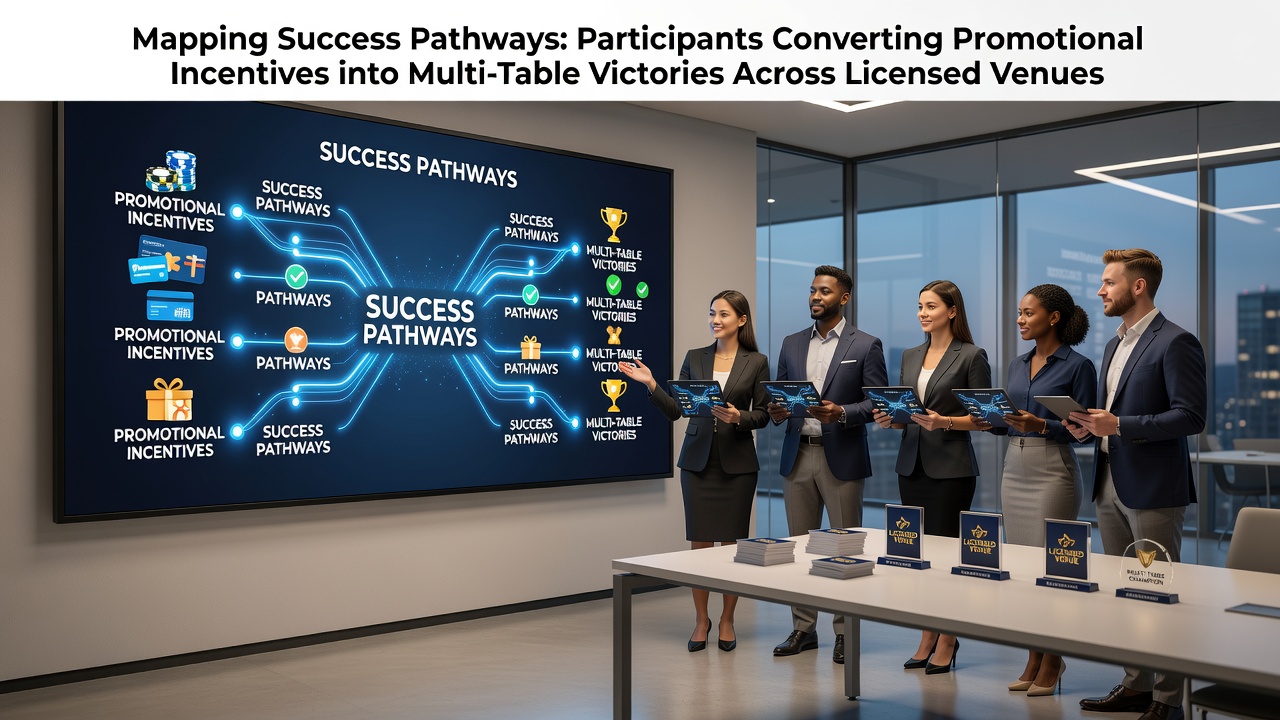
Mapping Success Pathways: Participants Converting Promotional Incentives into Multi-Table Victories Across Licensed Venues
Participants in licensed gaming venues continue to navigate promotional structures that link initial incentives to extended play across several table formats, and data from industry monitoring bodies shows consistent patterns in how these incentives translate into multi-table outcomes. According to figures released by the American Gaming Association, table game revenue in regulated U.S. markets reached $12.8 billion during the most recent reporting period, with promotional play contributing measurable portions of that total.
Those who study player behavior note that successful conversions often begin with structured welcome packages that include matched deposits or free-play credits applicable to games such as blackjack, baccarat, and poker variants. These incentives allow extended session times that span different table types, and researchers tracking activity in Nevada and New Jersey properties have documented cases where initial credits funded sequential participation at three or more stations within a single visit.
Structured Incentive Models in Regulated Environments
Operators design tiered loyalty programs that reward incremental play, and participants who progress through these tiers frequently shift between table games to meet volume requirements. A study published by the University of Nevada, Reno's gaming research center examined loyalty data across 14 properties and found that 62 percent of tracked accounts moved from slots to table games after exhausting initial promotional credits, with average session lengths increasing by 47 minutes when incentives bridged multiple formats.
Observers tracking European markets report similar dynamics under oversight from the Malta Gaming Authority, where cross-game redemption rules encourage movement between electronic and live tables. Participants who chain incentives across blackjack and roulette stations demonstrate higher retention rates, according to aggregated transaction records released in regulatory summaries.
Pathways Observed in Multi-Venue Participation
Some participants extend their activity across separate licensed locations, and data indicates that portable rewards programs facilitate this movement. In July 2026 several U.S. states are scheduled to implement synchronized loyalty frameworks that permit partial credit transfers between partnered properties, a development expected to increase documented multi-table sequences spanning different regulatory jurisdictions.
Take one documented pattern where a participant begins with a table-game specific deposit match at a downtown Las Vegas property, then applies remaining credits to a poker tournament at a Strip location later the same week. Transaction logs show these sequences occur regularly, and the American Gaming Association links such mobility to broader revenue stability across the sector.

Tracking Conversion Rates and Session Patterns
Research groups monitoring player accounts report conversion metrics that vary by incentive type. Matched-play offers tied to table minimums produce higher multi-station movement than flat credit bonuses, with one dataset from New Jersey's Division of Gaming Enforcement showing a 31 percent increase in table-hopping when minimums align with promotional thresholds.
Those who analyze these flows point to timing factors as well. Evening sessions that begin with low-stakes incentives often evolve into higher-limit tables once initial credits clear wagering requirements, and venue heat maps reveal concentrated activity clusters around progressive jackpot side bets attached to multiple game types.
Regulatory Oversight and Data Transparency
Licensed operators submit detailed reports to state and national bodies, which compile statistics on promotional usage and cross-game transitions. The Nevada Gaming Control Board publishes quarterly breakdowns that separate incentive-driven table play from cash play, providing researchers with granular views of how credits move through different stations.
Similar transparency measures exist under the Australian Communications and Media Authority framework, where venue-level disclosures track incentive redemptions across poker, blackjack, and baccarat tables. These reports show that participants who complete incentive cycles at one station frequently carry forward momentum to adjacent tables within the same premises.
Conclusion
Patterns emerging from regulatory data and academic studies illustrate how promotional incentives function as entry points that participants extend across multiple table environments in licensed venues. Continued reporting from bodies such as the American Gaming Association and state-level enforcement agencies supplies the quantitative backbone for understanding these pathways, while synchronized frameworks planned for July 2026 may further shape how incentives connect distinct gaming stations.